When your clients ask AI who to trust, it should name your firm.
Your future clients ask ChatGPT for “the best estate planning attorney in my city,” and Perplexity to compare concierge medical practices. Traditional SEO alone no longer decides who gets found. AI does. We make your firm easy for AI to find, trust, and cite by name. That means verified facts about your firm, structured data on every page, and answers written the way AI quotes them. We built SOMA Trauma Healing Center to 84 of 100 on our AI-Native readiness score, with complete MedicalBusiness schema and a bilingual answer surface.

The invisible architecture behind who AI recommends
Start here. This shows what AI engines actually read when they decide which firms to name, and why so many good firms are invisible to it.
Ready to go deeper? The AEO Formula is the entity, FAQ, and schema playbook for clear pages answer engines can quote. For the bigger picture, the free AI Visibility Ladder guide lays out the five rungs of AI visibility.
Get the AEO Formula · $4.97How we run every AI Visibility engagement
Build the entity clarity, schema, and answer-ready content AI engines read, so your firm is legible and citable from the first page.
Scope every move against your Bar advertising, HIPAA, or SEC constraints, so visibility never comes at the cost of a rule.
Track four things on the same client questions every month: how often AI names you, cites your site, how it describes you, and what it gets wrong.
One discipline.
Five surfaces to win.
AI assistants, search engines, and local map results each pick firms for different reasons. A full AI Visibility engagement covers all five. Each card below shows how.
You will also see this work sold as GEO, AEO, LLM SEO, AI SEO, or AIO. Those are competing names for one discipline, and the decoder below maps each one to the pillar that covers it. Read the GEO + AEO + LLMO whitepaper for the full framework.
Search stopped being a race to page one. The acronyms, decoded.
The old goal was a rank on a list of ten links, measured in traffic. The new goal is to be the source AI engines find, trust, and cite by name. Every agency sells that work under a different acronym. They are competing names for one discipline, so here is what each one means and which of our five pillars already covers it.
| What you will see it called | What it actually means | Our pillar |
|---|---|---|
| GEO, Generative Engine Optimization | Being cited and recommended inside a generated answer, in ChatGPT, Perplexity, Gemini, or Claude. | GEO → |
| AEO, Answer Engine Optimization | Being the source behind a direct answer: Google AI Overviews, featured snippets, People Also Ask, and voice. | AEO → |
| LLMO, LLM SEO | Building the named-author credentials, topical depth, and third-party corroboration a model trusts enough to recommend you by name. | LLMO → |
| AI SEO, AIO, AI Optimization | Classic search run with modern tooling, plus the machine-readable structure that lets AI tools and agents use your pages rather than just render them. | AI-Powered SEO → |
| Local AI, near-me AI search | The map pack and the local AI answer, which are now decided by overlapping signals. | Local AI Dominance → |
Classic SEO still gets you readable. These five decide whether the engines find you, trust you, and put your name forward. We split the work into five pillars rather than one label because each one ships different deliverables and moves on a different timeline.
The framework
Two halves, just like SEO.
On-page is the work on your own site and it ships early. Off-page is the corroboration across the rest of the web, and it runs the full term because it depends on schedules nobody controls. The whitepaper covers how the classic index still feeds the AI layer.
Read the frameworkThe engagement
A 90-day plan, in three phases.
A 40-query baseline in week one, then foundation, optimization and validation, with a share-of-voice report at Day 30, 60 and 90. No black box and no open-ended retainer. The full phase-by-phase breakdown lives on the plan page.
See the planSenior-built, and proven on live firms.
Founder-led, scoped against your field’s rules, and measured. Here is what we built.

AI Visibility + Practice Site
SOMA Trauma Healing Center
A warm, bilingual mental health practice site with full schema and a 44-article Journal and guide library. It reached 84 of 100 on our AI-Native visibility score.
Read the case
Law Firm Intake + AI Visibility
J. Randle Law
A Bar-compliant build from day one: LegalService schema, FAQ answers that cite the actual Florida statutes, and required disclosures on every page, so the firm stays defensible while it works to be cited.
Read the case
AI Visibility + Lead Automation
Debi Lom Real Estate
Rebuilt from a JavaScript shell AI crawlers could not read into server-rendered pages with a full entity graph, live MLS search, an AI concierge on every page, and automated nurture on every lead.
Read the case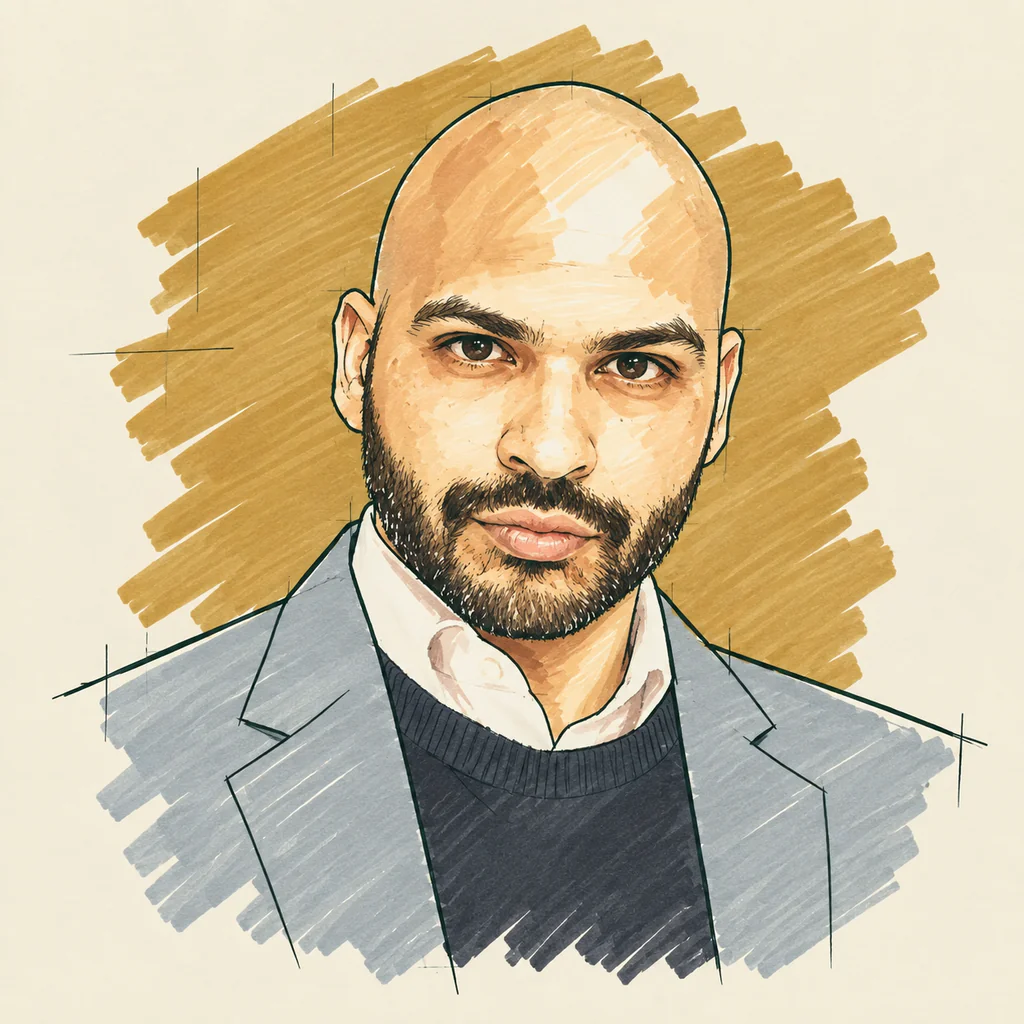
Who you work with
“I help regulated practices get found, trusted, and cited by AI, before it hands their best clients to lesser competitors.”
Brandon Aday, Founder, Aday Interactive, Inc.
Founded the firm in 2002. Seven years at Microsoft Latin America, then digital growth at Univision, Catalina Mobile Payments, and Cascade Financial Technology, and AI work at Southern Glazer’s Wine & Spirits. He leads every engagement personally.
Meet Brandon →Diagnose before you spend.
The ladder is deliberate: learn and diagnose for free, then climb only as far as you need. Each rung is its own deliverable and is priced on its own. The Firm Map comes before the Intensive, and each step builds on the work before it, so nothing is done twice. Schema in a Week is the lighter option beside the Intensive, not a step before it.
Your first step
Free
AI Visibility Scorecard
A downloadable PDF self-audit: 30 checks across ChatGPT, Perplexity, Google AI Overviews, and AI Mode, in about 15 minutes. You keep 3 PDFs: the Scorecard, The AI Visibility Ladder guide, and the Mastering AI Search Visibility whitepaper.
See Where You StandSee every option (7 more)
Learn & Self-Assess
$4.97
The AEO Formula
The AEO Formula ebook: the entity, FAQ, and schema playbook for clear pages answer engines can quote. You keep 3 PDFs: the ebook, plus the Scorecard and the whitepaper.
Get the EbookDiagnose & First Step
$14.97
AI Visibility (GEO) Audit
A quick on-page audit of your live site: core pages plus a sample, five counted areas, scored 1 to 72 on-page, with a branded PDF report and a 15‑min findings call with Brandon. Plus your full free library to keep.
Run my Audit$97
Founder-Led AI Growth Audit
The full AI Visibility Audit, every page measured, reviewed and signed by Brandon, naming what is wrong on your site and what to fix first. Delivered in 5 to 7 business days, with the AEO Step-by-Step mini-course and an invite to the monthly “Ask Brandon” group Zoom.
Order the Audit$197 · Start of done for you
Firm Map
Every fact AI uses to identify your firm, gathered and checked against your site, Google, licensing records, and your field's directories. One verified record you keep, and the base for everything after it.
StartDone for you
from $750 · Lighter option
Schema in a Week
The lighter option if you only want the structured data. Your current site, as it is: we add structured data that search engines and AI systems can read to up to 10 pages, plus one FAQ on your home page. Built from your $197 Firm Map; your copy stays the same. Done for you in 5 to 10 business days, with a before and after. $1,000 on hosted builders. The Intensive includes all of this.
Startfrom $2,700 · Done for you
AI Visibility Intensive
Schema in a Week included: structured data that search engines and AI systems can read on up to 10 pages plus the home-page FAQ, put in first. Then the parts of those pages that AI reads, rewritten: title, description, a direct answer at the top, and a short FAQ. Builds on your Firm Map. Done for you over 3 to 4 weeks, with a baseline against the firms AI names instead of you, a 90-minute working session, a readout with a written roadmap, and a re-check at day 30. $3,400 on hosted builders.
Applyfrom $5,000
90-Day Visibility Plan
Your website makes you readable to AI. This plan makes you cited. It is the off-site work done for you: a 40-query baseline across four AI engines, business profiles and the directories your field relies on, and citation and authority building, with share-of-voice reporting at Day 30, 60, and 90. It starts once your on-page foundation is in place, from a Website Build or the Intensive. The $5,000 floor is the focused scope; it scales with your query set and markets. After Day 90, ongoing work continues as a seat plus hours.
Important disclosure AI assistants (ChatGPT, Perplexity, Gemini, Google AI Overviews, and others) independently determine which firms they cite. We can architect for citation, measure where you appear, and identify where you don’t. But no agency can guarantee specific AI outputs, citation frequency, or search rankings. All performance metrics are directional and reported transparently each month. Engagements with law firms are scoped to comply with applicable bar advertising rules (e.g., ABA Model Rules 7.1 to 7.3 and the rules of your jurisdiction). Healthcare engagements respect HIPAA and FTC guidance on professional advertising. We do not draft, send, or sign client communications without your firm’s review.
Built for your industry
See how this applies to your firm
Every vertical has its own page with a free diagnostic scan calibrated to its rules and its language.
Does AI name your firm, or your competitor?
Ask ChatGPT who it recommends for your specialty in your city. If the answer isn’t your firm, the gap is measurable, and closeable. Start with the audit or bring the results to a consultation.
No charge and no obligation. If a call is not the right next step, we will say so and send something useful instead.
or call 305-209-8453 · se habla español